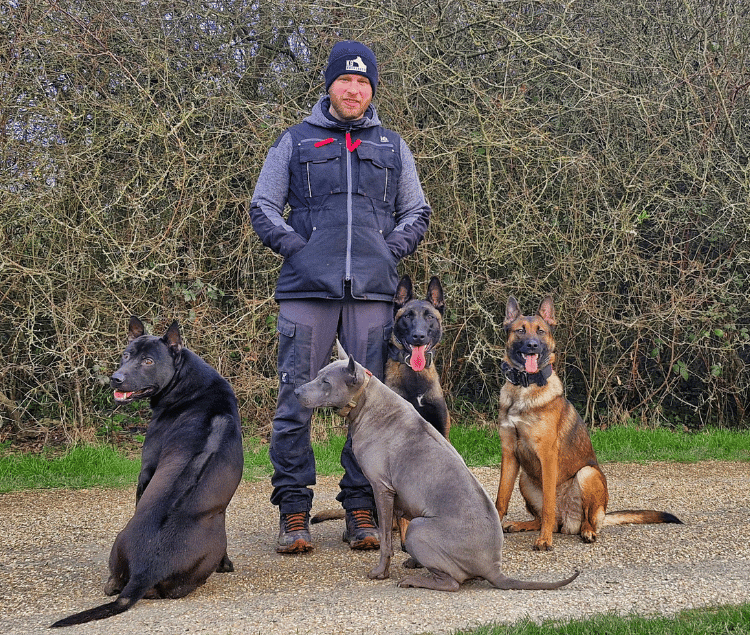
Why Rex Wasn't "Naughty" — He Was Unstructured
When Rex arrived, there was almost zero engagement with his handler. His default setting was full environmental fixation — sounds, movement, smells, anything except the person on the other end of the lead. That tells us one thing immediately: there was no expectation and no relationship value. The handler simply didn't matter enough yet. This isn't a character flaw. It's a training gap.
When the World Sets the Rules
A young dog like Rex isn't being naughty or overexcited. He's been allowed — unintentionally — to believe the world makes the decisions. When independence is rehearsed before discipline, the dog learns to self-govern before learning how to follow. That's backwards. And once a dog has practised ignoring the handler long enough, engagement doesn't magically appear later — it has to be rebuilt.
Why Teaching Expectation Early Matters
Expectation is the foundation of all reliable behaviour. Early expectation creates predictability, emotional stability, and handler relevance — your opinion starts to matter more than the environment. Without expectation, the dog has no reason to check in, slow down, or seek guidance.
Structure First, Freedom Second
Think of a young dog like an apprentice. If you let them freestyle from day one, correcting them later feels unfair and confrontational. But if structure is introduced early, guidance and correction feel normal. Dogs raised with early structure often appear calmer, more confident, and easier to live with. They aren't restricted — they're supported.
Expectation Is the Bridge Between Freedom and Control
Rex didn't need more excitement or stimulation. He needed clarity. He needed relevance. He needed expectation. And once that bridge is built, everything else becomes possible.
🐾 Training for life, not just for today.