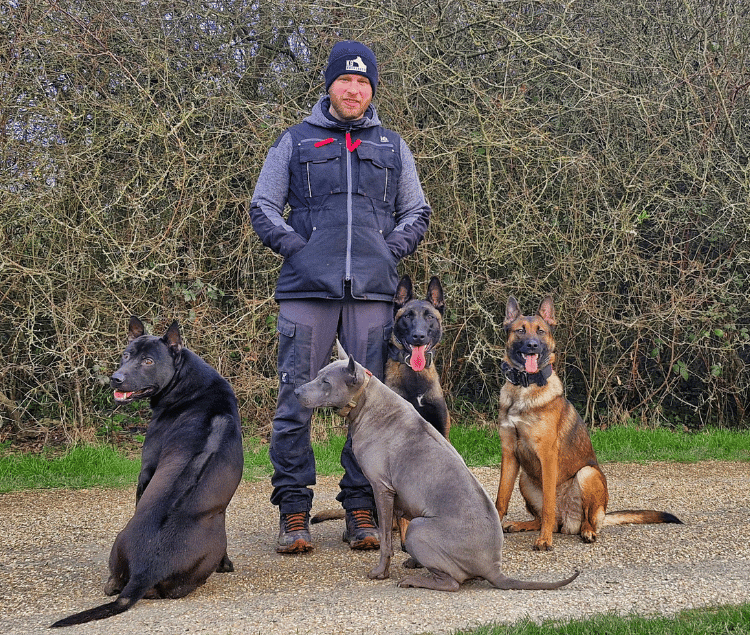
Introducing Dogs the Right Way: Why the Walk Comes First
Bringing dogs together for the first time can be exciting — but it can also go wrong very quickly if it's handled poorly. One of the biggest mistakes owners make is stopping, hovering, and letting tension build.
If you're introducing new dogs to each other, start on a walk. And if one or both dogs are reactive, keep moving. This isn't a coincidence. It's psychology, energy, and structure at work.
Why Walking First Works
Walking side by side gives dogs a shared purpose. Instead of standing face-to-face — an unnatural and confrontational position — they move in the same direction. This immediately reduces pressure and removes the feeling of being challenged. Movement keeps dogs thinking forward rather than reacting emotionally. In simple terms: walking creates calm.
Stopping Creates Tension
When you stop, everything changes. Leads tighten. Bodies stiffen. Owners hold their breath. Dogs feel it instantly. That tension travels straight down the lead and into the dog's body. And tension creates conflict. Dogs don't fight because they're bad — they react because the situation feels unsafe, confusing, or confrontational.
If Your Dog Is Reactive, Keep Moving
Reactive dogs need clarity and direction. Stopping removes both. Movement gives them something else to focus on. By continuing to walk, you're communicating leadership: I've got this. Follow me. Distance is your friend. Start far apart, walk parallel, and let the dogs settle before gradually closing the gap. No forcing. No face-to-face pressure.
Structure Over Socialisation
Good introductions aren't about letting dogs sort it out. They're about structure, calm handling, and clear direction from the human. The goal isn't instant play — it's neutrality. Calm coexistence comes before friendship. When dogs feel safe and guided, positive relationships follow naturally.
🐾 Training for life, not just for today.