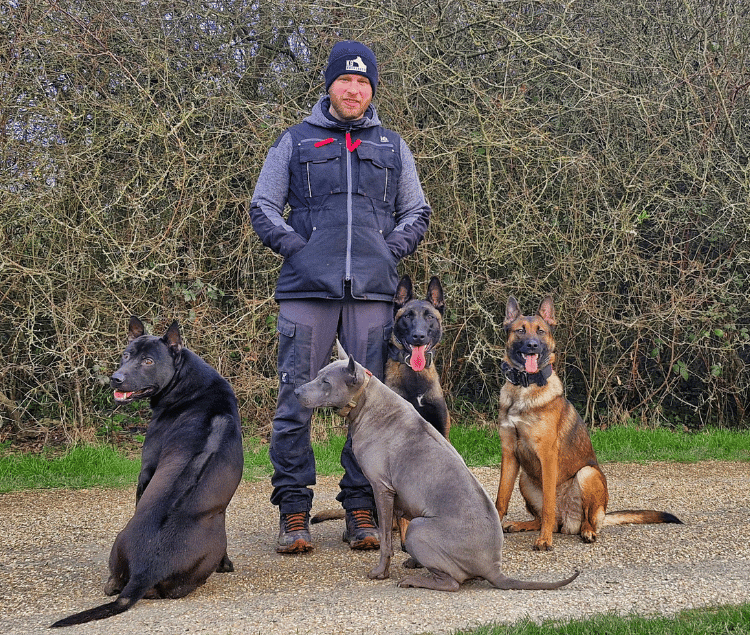
From Chaos to Calm: How Honey Overcame Reactive Behaviour (And How Your Dog Can Too)
If you're living with a reactive dog, you know the exhaustion that comes with it. The constant vigilance, the crossed-street avoidance tactics, the way a simple walk becomes a military operation. You scan ahead for triggers, plan alternative routes, and still find yourself caught off guard. Meet Honey — a dog whose story might sound remarkably familiar.
When Everything Becomes a Threat
Honey was highly reactive to virtually everything in her environment. Dogs approaching from any distance would send her into a frenzy. Birds taking flight triggered explosive responses. Even something as mundane as a plastic packet caught by the wind could transform her from a calm companion into a lunging, barking force of nature. Her owners had tried everything — treats, distractions, avoiding triggers altogether — but nothing seemed to work.
The Reactive Mind
To understand how to help a reactive dog, you first need to understand what's actually happening in their mind. Reactivity isn't about aggression or a dog being bad. It's about a nervous system that's stuck in constant alert mode. A reactive dog is essentially asking: What do I do? What's the plan? Should I be worried about that? When they don't get clear guidance from their handler, they default to their own coping mechanisms — which usually involve making a lot of noise and trying to create distance from whatever has triggered them.
The Transformation Begins
With Honey, it didn't take long to settle her mind once we implemented the right approach. The key wasn't trying to eliminate her triggers — it was giving her a clear framework for how to respond. We focused on three fundamental elements: Structure — clear protocols that removed the burden of choice from her shoulders. Consistency — predictable interactions that allowed her nervous system to begin settling. Clear Communication — changing her equipment to allow clearer guidance between Honey and her handler.
The Mindset Shift
What many owners don't realise is that reactive behaviour often stems from a lack of leadership rather than a lack of training techniques. Honey wasn't reactive because she was poorly trained — she was reactive because she felt responsible for managing threats in her environment. Once her handler stepped into the leadership role properly, something remarkable happened. Honey's focus returned. Instead of scanning the environment for potential problems, she began looking to her handler for guidance. The reactivity dropped dramatically.
Your Dog's Potential
Every reactive dog has the potential to become calm and confident like Honey did. Reactivity is a symptom, not a life sentence. With the right approach, structure, and guidance, even the most challenging reactive behaviours can be transformed. Your dog isn't broken, and you haven't failed as an owner. You simply need the right roadmap.
Let's start your dog's transformation today!