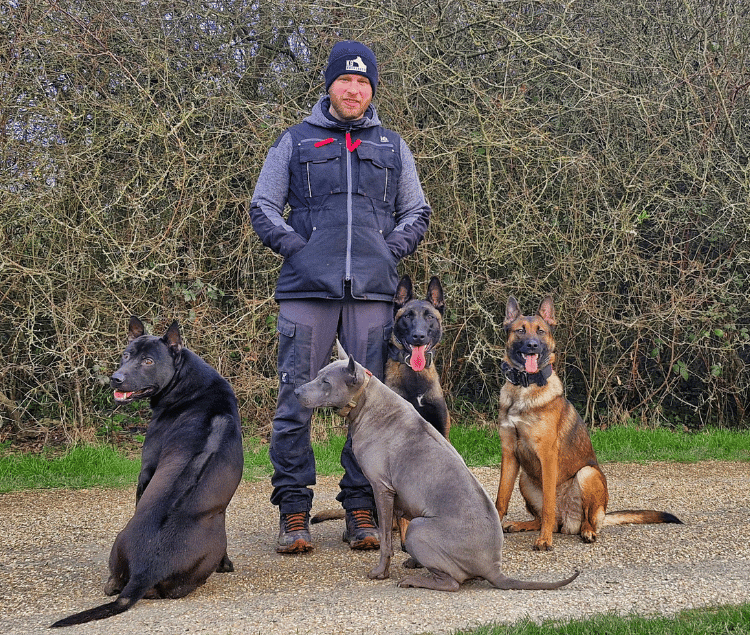
Breaking Through to Independent Dogs: How E-Collar Training Transformed Qimi's Recall
Some dogs live to please their humans. They hang on your every word, watch your face for cues. Then there are dogs like Qimi — sharp, independent thinkers who operate on their own terms and seem to view your requests as mere suggestions rather than commands.
The Independent Dog Dilemma
Qimi is what many would call a difficult dog to train — not because he lacks intelligence, but because he possesses too much of it. When you call him, you can practically see him weighing up his options: What's in it for me? Is what I'm currently doing more interesting than what my human wants? Traditional training methods that work brilliantly with eager-to-please dogs often fall flat with these self-directed characters.
The Communication Breakthrough
Teaching Qimi the foundations of e-collar recall was a joy to witness. The e-collar gave us a clear, consistent way to communicate — even at distance — that transcended the limitations of voice commands and food rewards. For dogs like Qimi who process information differently, the e-collar provides something traditional methods often can't: absolute clarity. There's no ambiguity, no room for interpretation.
This isn't about dominance or showing the dog who's boss. It's about creating a communication system that works for both species. The e-collar bridges the gap without frustration or nagging, providing a clear channel of communication that respects the dog's intelligence whilst establishing non-negotiable boundaries.
Beyond Punishment: Understanding Pressure and Release
One of the biggest misconceptions about e-collar training is that it's about punishment. In reality, effective e-collar work is about pressure and release, timing, and clarity. The process was about teaching Qimi to understand the pattern: pressure applied, correct response given, pressure immediately released. This system appeals to intelligent, independent dogs because it's logical, consistent, and fair.
The Freedom Paradox
Before training, Qimi's independent nature meant he had to be restricted — kept on lead in many situations. Now, with reliable recall established, he enjoys much more freedom than ever before. This is the paradox of good training: temporary restrictions and clear boundaries ultimately lead to greater freedom and trust. Your dog's intelligence and independence aren't obstacles to overcome — they're assets to work with.